
01
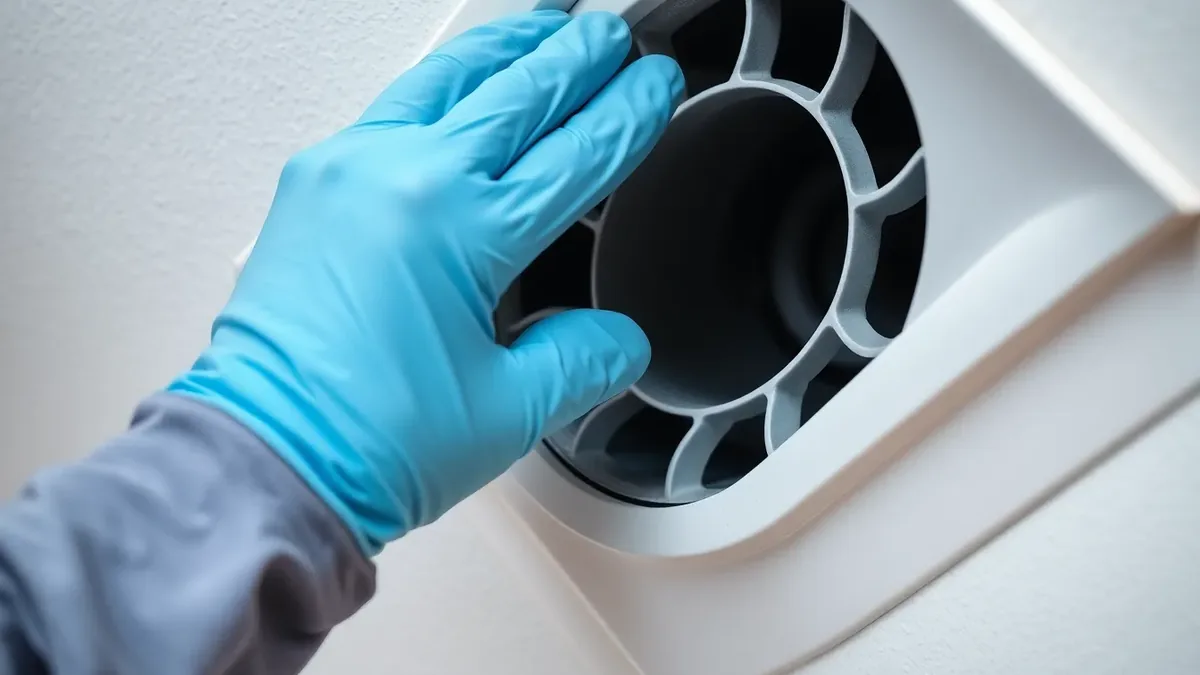
Pre-service video inspection
Borescope assessment of contamination levels, leaks, or damage. Establishes the scope of work in writing.
Commercial air duct cleaning is the NADCA-protocol process of removing contaminants from HVAC systems in offices, medical facilities, restaurants, retail spaces, schools, and warehouses to improve indoor air quality and system efficiency.
HEPA-certified equipment, after-hours scheduling, and written documentation that holds up to compliance review, the kind of work the EPA and ASHRAE recommend, done by a team that's NADCA + IICRC trained and answers their own phone.

 Locally ownedHouston, TX · founded 2023
We adjust the protocol, the scheduling, and the documentation to your industry's specific compliance requirements. We do not adjust the quality of the work.
Hospitals, clinics, dental offices, outpatient centers. NADCA standards + HEPA-certified equipment for sterile conditions, with documentation supporting Joint Commission reviews.
Houston Health Department inspections include HVAC and ventilation. Grease and smoke accumulate fast, and regular cleaning keeps you compliant and reduces fire risk.
Dirty ducts mean stuffiness, odors, sick days, and complaints. Clean ducts mean fresher air, fewer absences, and measurable HVAC efficiency gains. Lower utility bills follow.
Children are the most vulnerable to poor indoor air. We schedule around breaks to avoid disruption. Documentation provided for facility records.
Customer experience starts with the air. Stale, musty, or dusty air gets noticed instantly. Hotels, retail centers, and showrooms benefit from regular cleaning every 1–2 years.
Truck-mounted negative-air machines and HEPA filtration, scheduled after-hours for minimal disruption.
According to the EPA, "indoor air can be two to five times more polluted than outdoor air." ASHRAE recommends regular HVAC inspection and maintenance to protect occupant health and system efficiency. Houston's specific climate challenges accelerate every contamination factor:
Humidity above 70% most of the year encourages mold and mildew, especially in older commercial buildings. Heavy oak and cedar pollen seasons are among the worst in Texas. Continuous construction activity sends drywall dust and silica into nearby HVAC intakes. Year-round HVAC use never gives systems the cool-season rest they get in northern climates. The result: faster contaminant accumulation and a stronger case for regular cleaning.
Borescope assessment of contamination levels, leaks, or damage. Establishes the scope of work in writing.
Supply and return registers sealed. Drop cloths and protective coverings deployed throughout the work area.
Commercial-grade negative pressure machine creates a controlled vacuum. Contaminants flow to the collection unit, never back into your space.
Pneumatic systems scrub interior duct walls, breaking loose years of accumulated dust, debris, and biofilm that suction alone cannot remove.
Extracted material captured in HEPA-rated equipment. Traps 99.97% of particles down to 0.3 microns.
Optional add-on. Dirty coils reduce HVAC efficiency by up to 40% and directly raise utility bills. We clean them.
EPA-approved sanitizing chemistry safe for occupied commercial environments, including healthcare and food service.
Final inspection followed by a written documentation packet for your facility records, compliance reviews, and insurance file.
Facilities with rising energy costs and employee allergy complaints often have the same root cause: heavy dust accumulation and biological growth in the air handlers. Duct, coil, and air handler cleaning together address the airflow path, not just the ducts, which is where the U.S. Department of Energy's up to 25% efficiency gain comes from.
U.S. Department of Energy data: clean systems run up to 25% more efficiently than contaminated ones. Lower utilities, longer equipment life.
Reduced airborne allergens, dust, and pathogens directly reduce respiratory illness in commercial environments.
For restaurants, healthcare, and schools, clean ducts directly support passing health department and accreditation inspections.
Nights, weekends, holidays. We work around your hours of operation, not the other way around. Minimal disruption, full results.
Every 6 to 12 months. Grease, smoke, and food particulates accumulate fast.
Every 12 months, or per accreditation requirements. Sterile-environment standards.
Every 2 to 3 years. Adjust up if employees report air quality complaints.
Every 1 to 2 years. Children are most vulnerable to poor indoor air.
Every 12 to 18 months depending on particulate exposure.
Every 1 to 2 years. Customer-facing air quality affects experience.
Duct cleaning addresses the trunk lines. Coil cleaning addresses the evaporator and condenser coils inside the air handling unit, where dust and grease film build up on the fins and choke airflow.
Dirty coils are an overlooked driver of high commercial energy bills. As grime coats the fins, the system works harder to move the same air, and U.S. Department of Energy data shows a dirty coil can cut HVAC efficiency by up to 25 to 40 percent.
Our service uses a low-pressure, no-rinse cleaner safe for aluminum fins, plus a check of drain pans and condensate lines. Available standalone or bundled with duct cleaning, typically every 12 to 24 months, more often for kitchens with heavier grease loads.
The air handling unit is the housing that moves conditioned air through the duct system, and it's where filters, blower wheels, and drain pans collect dust and moisture that ducts alone don't reach.
A thorough air handler cleaning covers the blower wheel and housing, which accumulate dust that a duct-only cleaning does not reach. A dirty blower wheel loses balance and airflow capacity, forcing the motor to work harder and shortening its life. We also inspect filter racks and the ductwork transitions connected to the unit.
For multi-unit properties with rooftop package units or split systems, each unit gets documented separately in the service report. Air handler cleaning is typically done alongside duct and coil cleaning in the same visit, since one scheduled visit beats three.
Pro-Fresh Houston cleaned the ducts in our 15,000 sq ft medical clinic in Humble. The process was professional, thorough, and completely non-disruptive to our patients.Dr. M. TorresClinic Director, Humble TX
Frequency depends on industry, building age, and occupancy. Houston's humidity and pollen mean most facilities benefit from cleaning every 1 to 2 years, restaurants and healthcare typically every 6 to 12 months. We give a customized recommendation after inspection.
Houston Health Department and Texas food service codes require ventilation systems to be kept clean and sanitary, and healthcare accreditation standards address HVAC maintenance too. Failing a ventilation-related inspection can mean fines or closure, so proactive cleaning is the safer strategy.
Yes. Coil and air handler cleaning are available standalone or bundled with a duct cleaning visit. Since all three share the same airflow path, most facilities schedule them together in one visit instead of three.
A 5,000 to 15,000 sq ft building typically takes 4 to 8 hours; larger or heavily contaminated systems may take longer. We schedule nights, weekends, and holidays around your hours so disruption stays minimal.
Commercial air duct cleaning typically runs $500 to $3,000+ depending on square footage and system complexity. Free written estimate before any work begins, no hidden fees.
Pre-service borescope photos, scope of work performed, sanitization products used with EPA registration numbers, post-service photos, and technician sign-off, useful for compliance and insurance records.
Free inspection, written quote before work begins, scheduling around your hours, documentation that supports compliance.