



Does Air Duct Cleaning Actually Improve Indoor Air Quality?
Yes, when the contamination lives in the ductwork. Your HVAC system circulates the full volume of air in your home several times every hour. Whatever has settled inside the supply runs, return lines, coil, and blower gets picked up and redistributed with every cycle. Professional air duct cleaning removes that reservoir at the source, so the system stops re-seeding every room with dust, dander, and spores.
The honest version of this answer includes a caveat most companies skip. The EPA states that duct cleaning has not been shown to prevent health problems in every situation, because not every air quality problem starts in the ducts. If the contamination is coming from a crawl space, an attic bypass, or outdoor infiltration, cleaning the ducts treats a symptom. That is why a real inspection comes before any quote, and why we sometimes tell Houston homeowners their ducts are not the problem.
When ducts are the problem, the change is real and often immediate: less settling dust, fewer allergy flare-ups, no more musty smell when the system kicks on, and measurably better airflow at the registers.
Key Takeaways
- Air duct cleaning improves indoor air quality by removing contamination at the source, not by masking it.
- Houston humidity makes ductwork contaminate faster than the national norm; moisture plus settled dust is how microbial growth starts.
- NADCA-standard source removal under negative pressure is the method that works. Fogging and "sanitizing only" shortcuts are red flags.
- Most Houston homes benefit from cleaning every 3 to 5 years; pets, allergies, renovations, and moisture events shorten the interval.
- Expect a written, itemized quote and before-and-after photos. A vague phone price is not a quote.
What Builds Up Inside Houston Air Ducts
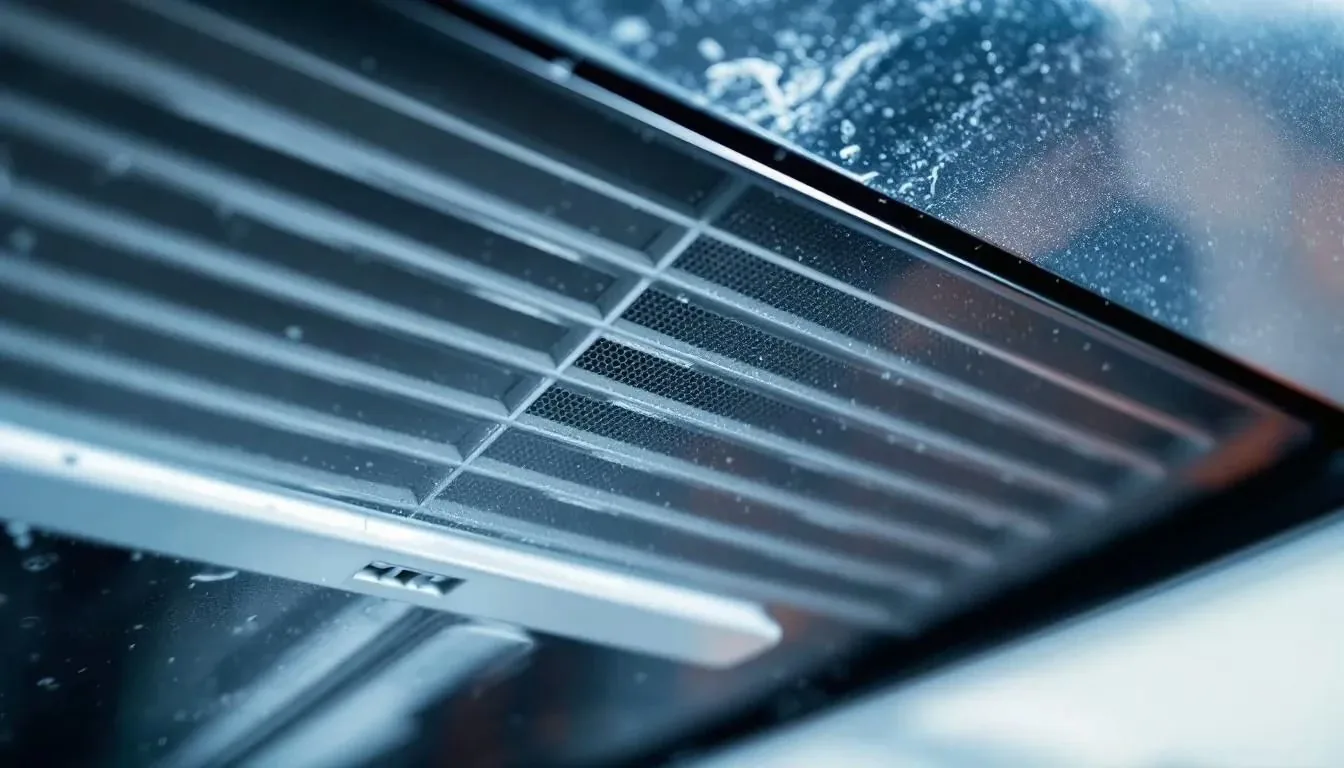
An average home generates around 40 pounds of dust per year, and the duct system inhales a share of it through returns and gaps. Over time the inside of your ductwork accumulates:
- Household dust and dust mite debris, the baseline load in every system.
- Pet dander, which stays airborne for hours and clings to duct walls.
- Pollen, a year-round factor in Houston, where oak, ragweed, and grass seasons overlap.
- VOCs and odor compounds that adsorb onto dust and off-gas back into the airstream.
- Construction and renovation debris, drywall dust in particular, common in Houston's busy housing market.
- Microbial growth, the most serious item on the list and the most Houston-specific. If you have seen dark staining around supply registers, that conversation belongs on our microbial growth in HVAC page.
Houston Humidity Is the Multiplier
The reason national advice underestimates the problem here is moisture. Houston summer mornings average close to 90 percent relative humidity, and the cooling season runs from March into November. Every hour your air conditioner operates, warm humid air meets cold metal at the coil and supply boots, and condensation forms. Dust inside the ducts absorbs that moisture and becomes a food source. Mold does not need standing water; it needs damp organic material and about 48 hours.
This is why the same duct system that stays inert for a decade in Phoenix can develop active microbial growth in a few seasons on the Gulf Coast. It is also why duct cleaning in Houston is a health measure first and a comfort upgrade second. Homes with weak attic insulation, oversized AC units that short-cycle, or any history of roof or plumbing leaks contaminate fastest.
The Health Side: Allergens, Asthma, and Sleep
The EPA estimates indoor air can be two to five times more polluted than outdoor air, and most people spend the large majority of their time indoors. For healthy adults, dirty ducts mostly mean more dusting and a stale smell. For the vulnerable members of a household, the impact is sharper:
- Allergy sufferers react to the dander, pollen, and dust mite load the system keeps in circulation.
- Asthmatics, including roughly one in twelve Houston-area children, are sensitive to both particulates and mold spores.
- Infants, elderly family members, and anyone immunocompromised carry the highest risk from airborne microbial contamination.
Families consistently report the same pattern after a thorough source-removal cleaning: night-time congestion eases, morning symptoms fade, and the bedroom air smells neutral again. We do not promise medical outcomes, and you should be skeptical of any company that does. We remove the contamination; bodies tend to notice.
What Duct Cleaning Will and Will Not Fix
A premium service tells you both halves.
It will: remove accumulated dust, dander, pollen, and debris from the full duct run; eliminate the musty odor that rides the airflow when the blower starts; reduce the dust load that settles on furniture; restore airflow lost to debris constriction; and remove verified microbial contamination when paired with proper remediation.
It will not: fix humidity problems caused by an oversized or failing AC system; stop infiltration from an unsealed attic or crawl space; compensate for cheap filters that are never changed; or cure mold that originates in wall cavities or on the coil if the underlying moisture issue is left in place. If we find one of those conditions during inspection, the quote says so in writing.
Cleaning vs. Sanitizing: Know What You Are Buying
Cleaning is mechanical. Agitation tools dislodge the debris, and a HEPA-filtered negative-air machine pulls it out of the system under suction so it leaves your house in a sealed container rather than through your living room. This is the NADCA ACR standard, and it is the part that actually improves air quality.
Sanitizing is chemical. An EPA-registered antimicrobial is applied after cleaning, and only when microbial growth has been verified. Used correctly it is a finishing step. Used as a substitute, fogging fragrance through dirty ducts, it is theater. If a company leads with sanitizing, or quotes a price too low to include real source removal, you are not buying clean air. You are buying a smell.
The Efficiency Dividend
Air quality is the reason to clean ducts; energy efficiency is the bonus. Debris constriction and a dust-blanketed coil force the blower to work harder to move the same air. The Department of Energy attributes meaningful HVAC energy waste to exactly this kind of restriction, and Houston households feel it directly in summer electricity bills. After cleaning, systems reach set temperature faster, cycle less, and carry less mechanical strain, which extends equipment life. Our cost guide covers how the investment compares to those recurring savings.
Signs Your Houston Home Needs Duct Cleaning Now
- Visible dust plumes from supply registers when the system starts.
- Dark streaking or staining on registers, grilles, or the ceiling around them.
- A musty or stale odor that appears with the airflow and fades when the system idles.
- Allergy or asthma symptoms that improve when you leave the house.
- Dust that returns to surfaces within a day of cleaning.
- Rooms that heat and cool unevenly despite a healthy AC system.
- Recent renovation, a roof leak, or any moisture event involving the attic or HVAC system.
Any one of these justifies an inspection. Two or more, in a Houston summer, justify a phone call this week.
How Often, In This Climate
NADCA recommends a professional inspection every two years, with cleaning as conditions warrant. For Houston, with our humidity and our long cooling season, the practical cleaning interval for most homes is every three to five years. Shorten it if you have shedding pets, multiple allergy sufferers, smokers in the home, recent construction dust, or any history of microbial growth. A residential duct cleaning on that cadence, combined with quality filters changed on schedule, keeps the system from ever returning to baseline contamination.
How to Vet a Duct Cleaning Company in Houston
The duct cleaning industry has a coupon problem, and Houston has more than its share of bait pricing. Protect yourself with four checks:
- NADCA membership and ACR-standard methods. Ask specifically about negative-pressure source removal and HEPA filtration.
- A written, itemized quote before work begins. The quote should name every component: supplies, returns, trunk lines, coil, blower.
- Photo documentation. Before-and-after photos of your ducts, not stock images.
- No surprise add-ons. The "we found mold, it is $2,000 extra" pivot mid-job is the signature move of the bait-price model. Verified findings belong in a revised written quote you can decline.
Pro-Fresh is NADCA-trained and IICRC-certified, holds a 5.0 rating across 99 verified Google reviews, and quotes every job in writing after an in-person inspection. That is the standard we would tell you to demand from anyone, including us. You can meet the team behind the work on our who we are page.
Indoor air quality in Houston is not a luxury concern. It is the air your family breathes through ten months of closed-window living. If your registers are streaking, your allergies flare indoors, or your system smells like a damp towel when it starts, the ductwork is telling you something. Request an in-person estimate and we will tell you, in writing, exactly what we find.